
.svg)
.svg)

Learning how to write a blog is an investment in your website's success. Blogging helps you engage with your audience, build relationships, and establish yourself as a leader in your topic area — all in a format that stays online functionally forever, or until you take it down.
Best of all, you don't need experience to get started. This guide can help any writer plan and publish a successful blog, even if you're a complete beginner.
What Makes a Blog Post Engaging and Rankable?
First and foremost, don't get stuck trying to balance user engagement and search performance. The best posts do both simultaneously by following a few simple rules. Here's how to write a blog that checks both boxes:
- Clear alignment with search intent: Successful blog posts signal to readers that they're in the right place. If you're targeting a reader who is searching for information on a topic, preview what they'll learn. If they're looking to solve a problem or browse product options, highlight those takeaways.
- Value-first content, not keyword-first: Every content writer and publisher wants to rank highly in search, but you won't get there by stuffing your post with keywords. Google rewards content that provides reader value, which in turn drives greater engagement and connection with audiences.
- Content depth and quality: You want to keep people reading and answer their questions thoroughly. The length of your blog post will depend on the complexity of your topic, ranging from 800 to 1,500 words for simpler topics to as many as 2,500 words for more in-depth subjects.
- Structure for readability: Posts are easier to read and rank better on Google when they're scannable and follow a logical layout. Set up your content with clear headings, concise paragraphs, and a logical flow between sections.
- Credibility and trust signals: Readers and search engines respond more positively to content that feels trustworthy and well considered. Google describes this type of content using the E-E-A-T framework: experience, expertise, authority, and trustworthiness. Display these signals by writing with clear explanations, accurate information, and a confident but deliberate tone.
These guidelines apply to writers of any experience level, including beginners learning how to write a good blog post. Effectiveness comes from structure, intent, and preparation, not experience.
What To Do Before You Start Your Blog Post
Planning is the most crucial part of any blog writing process. It ensures your blog aligns with your content strategy, flows well, and meets readers' needs.
Don't succumb to the temptation to skip this step. It may feel like you're saving time, but you're more likely to end up with content that isn't clear and doesn't land. Protect the time you've invested in writing a blog post by strategizing first.
Identify Your Target Audience
Before you do anything else, you need to define your audience and select a topic aligned with their needs. Understanding your audience is key to the success of your content marketing strategy, so don't be afraid to take your time.
Think about the problems you solve for your readers. Whether you're a business or an individual, what needs do you meet? Define those needs explicitly and articulate the expectations people have when they click on one of your posts.
You're thinking on a general level at this stage. Once you select a topic for each post, you'll go through the same process for that content.
Brainstorm Your Topics
If you know your audience well, it becomes easier and more enjoyable to generate fresh blog ideas. The best process is a top-down approach, starting with the overall goal for your content strategy. Identify what you want your audience to take away, and use that as the jumping-off point for keyword research.
Keyword research tools, such as Google Keyword Planner and Ubersuggest, will help you brainstorm short- and long-tail keywords that match your users' search intent. Enter those seed keywords into Google and explore the search engine results page (SERP) to learn what topics your competitors are covering for those search terms. You can also plug those results into more robust planning tools, such as Semrush and Ahrefs, to identify your competitors' keyword rankings.
Start organizing your topics as soon as you have a few. One flexible and scalable option is the content pillar strategy, which builds around a cornerstone content. This content, also known as a pillar page, covers a broad topic at a high level. It then links to "cluster" pages, each covering a different subtopic.
Keep your ideas organized by adding them to this free content calendar template. You can always edit it as you refine your strategy.
Research What To Write About
The final step is to brainstorm ideas for what each post will cover. Plug your primary keywords into the SERP to see what points the AI Overview and top-ranking pages address. Take notes on the points other articles cover and anything you think is missing.
You don't have to look only at blog posts. Videos, case studies, infographics, and other content formats can give you valuable ideas to make your post stand out.
If you're an experienced content creator, your own material might come up. If so, you can repurpose content to meet your current audience's needs. Add those options to your content calendar, along with any other ideas that come up.
9 Steps to Writing a Great Blog
Now that you have a top-down strategy, it's time to learn how to write a blog post. As with the planning process, you'll start with the overall structure.
1. Write a Clear, Compelling Blog Title
Take your idea for each blog post and turn it into a working headline. Consider this a rough draft that summarizes the post and includes the primary keyword. Edit your title until it sounds natural and accurately reflects the content of the post.
2. Outline the Structure of Your Blog Post
This is another planning step you don't want to skip. Good content writing is well-structured and flows logically from one section to another, so readers can easily follow your thoughts. Clear organization also helps Google bots crawl, improving your chances of ranking higher.
Don't worry — learning how to write a blog post outline is easier than you might imagine, especially if you've done your homework. Open your notes and review the points you plan to cover. This is the perfect time to conduct any additional research needed to better understand the topic and essential subtopics.
Brainstorm a list of main points, then turn those points into headings. The highest-level subtopics are your main headings, which appear in content formats as H2s. Headings within those sections are H3s with H4s underneath, and so on.
A well-organized article can significantly improve your SEO. Outsource your content briefs with Compose.ly to receive professional, keyword-informed outlines that make content writing simple.
3. Write an Introduction That Sets Expectations
The first sentence of a blog should "hook" the reader and reassure them that they're in the right place. Acknowledge their key pain point and hint at a potential solution, but don't give too much away.
The rest of the introduction should summarize what the reader will accomplish or understand. Keep every sentence relevant, avoiding the temptation to generalize or ramble in long sentences. Anything obvious or repetitive, including sentences that repeat the title, will frustrate the reader and make them click away.
4. Draft the Body With Clear Structure and Flow
This is where a detailed outline pays off. With the structure of your article in place, you can focus on engaging the reader from beginning to end. Your goal is to carry them to the conclusion, where you'll inspire them to take action.
- Break it up: Divide your content into logical sections, each addressing a particular point.
- Add supporting details: Explanations, examples, and action steps clarify your main points. Write to your target reader's level of understanding, so you don't talk down to an expert or above a beginner's head.
- Use tiered headers: Publishing software lets you create subsections with nested headers, from H2s to H6s. This makes your content more scannable and helps readers understand the relationships between subtopics.
- Keep paragraphs short: Online readers want easily digestible paragraphs, especially when they're reading on tablets or smartphones. Three in five internet users now choose mobile over desktop, so small-screen readability is key. That means no more than four sentences per paragraph.
- Use bulleted lists: These break up longer subsections, making it easier to scan for important information. Use bullets for unordered lists, such as this one, and numbers for those where sequence matters.
- Consider tone: Aim for an engaging writing style with a consistent brand voice. If it's a new blog, your first few posts will establish that voice.
- Avoid content fluff: Fluff makes an article longer without adding value, which frustrates readers. When in doubt, ask yourself if a sentence provides any new information or insight. If the answer is no, it's fluff.
Your draft should be comprehensive enough to be the best resource on the topic, but not so complex that it's difficult to understand.
5. Close With a Purposeful Conclusion
A satisfying conclusion accomplishes three goals:
- Recapping the post: Remind readers of what they learned in a sentence or two. This underscores the post's value and helps readers feel they've spent their time wisely.
- Reinforcing the main takeaway: Solidify your key point in the reader's memory and inspire them to take action.
- Provide a clear next step: Finish with a call to action that moves readers toward a solution. Depending on the type of post, you might invite them to download a resource, sign up for a mailing list, or explore your website in more depth.
Avoid adding new information to the conclusion. Focus on wrapping things up and making readers feel confident about moving forward.
6. Edit and Proofread for Clarity and Accuracy
Finishing the last sentence of your blog post is a huge accomplishment, but you're not done yet. Step away for a few minutes and then read it over, following these editing steps:
- Check clarity, flow, and structure: Pretend you've never encountered this post before. Ask yourself if it makes sense and is easy to read. Focus on the big picture here.
- Edit for grammar and spelling: Run it through a tool like Grammarly or Hemingway to catch errors you might miss. Review it with your human eyes afterward, as these tools can introduce additional errors.
- Verify facts, links, and examples: Make sure your stats are accurate and links work. If you've done any calculations, check your math.
When you're done, do a final read-through from a reader's perspective. Does it make sense and provide value? If yes, you're nearly done.
7. Add Visuals and Media Where They Add Value
Visual elements make your content more engaging and readable, but only if they make logical sense. Read your post and consider where a graph, chart, or photo might emphasize a point or enhance the reader's understanding.
For additional SEO value, consider creating your own graphs using tools like Canva or Plotly. Original visualizations are shareable and can help you get backlinks, which lead readers to your post from third-party websites. Or, if the perfect graph already exists, share it with a link to the publisher.
Finally, make your visuals accessible by adding alt text. This describes the image for screen readers and Google crawlers, which is great for search optimization.
8. Optimize Your Blog Post for SEO
After you've created a post that's perfect for your target readers, take a moment to refine it for Google. Check for:
- Meta tags: Specially marked elements, such as a meta title, meta description, and URL slug, which can enhance your article's presence in search results
- Structured data: Code markups that alert Google to specific elements of a website, so you have a better chance of appearing in non-textual results
- Internal links: Options that let the reader click to relevant pages on your site
- External links: Links to other web pages so that readers can see your reliable sources
- Primary and secondary keywords: Terms that match possible search intent, integrated where they make sense in the content
Make sure your keywords sound natural wherever they appear. Keyword stuffing is a prime example of black hat SEO, which Google reads as an attempt at manipulation. Black hat techniques will harm your search rankings.
9. Publish and Promote Your Content
Once you've reviewed the post for content quality and SEO, you're ready to hit "publish." It's an exciting moment, but don't forget to promote!
Promoting on social media helps your audience find and share your content. Focus on social media platforms like Facebook, X, and LinkedIn, which make it easy to share links. Don't forget owned channels, such as your email list and website homepage.
Drive Organic Traffic to Your Website With Blog Content
If you lack the time and/or expertise required to produce quality content for your blog, consider outsourcing your content creation.
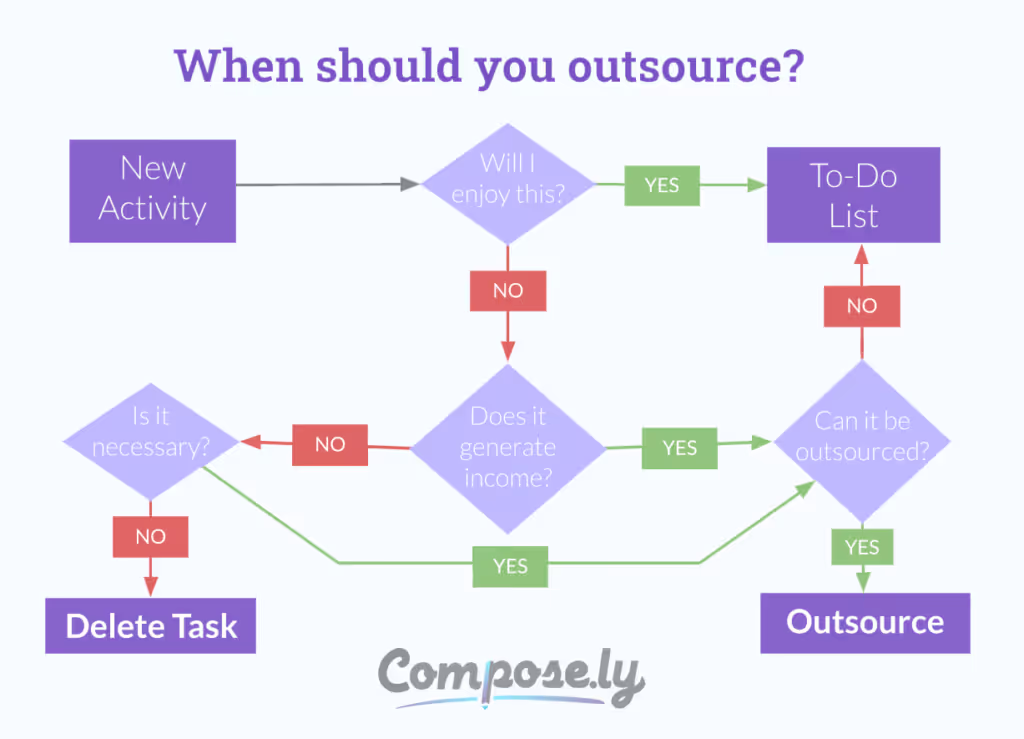
Outsourcing your blog and website production will save you the time and the money it would take to hire a full-time, in-house writer. You'll be able to establish a content schedule and have access to writers who are experts in your industry.
Want to find quality freelance writers without the hassle of sifting through dozens of resumes? Compose.ly’s blog writing services might just be what you’re looking for.


